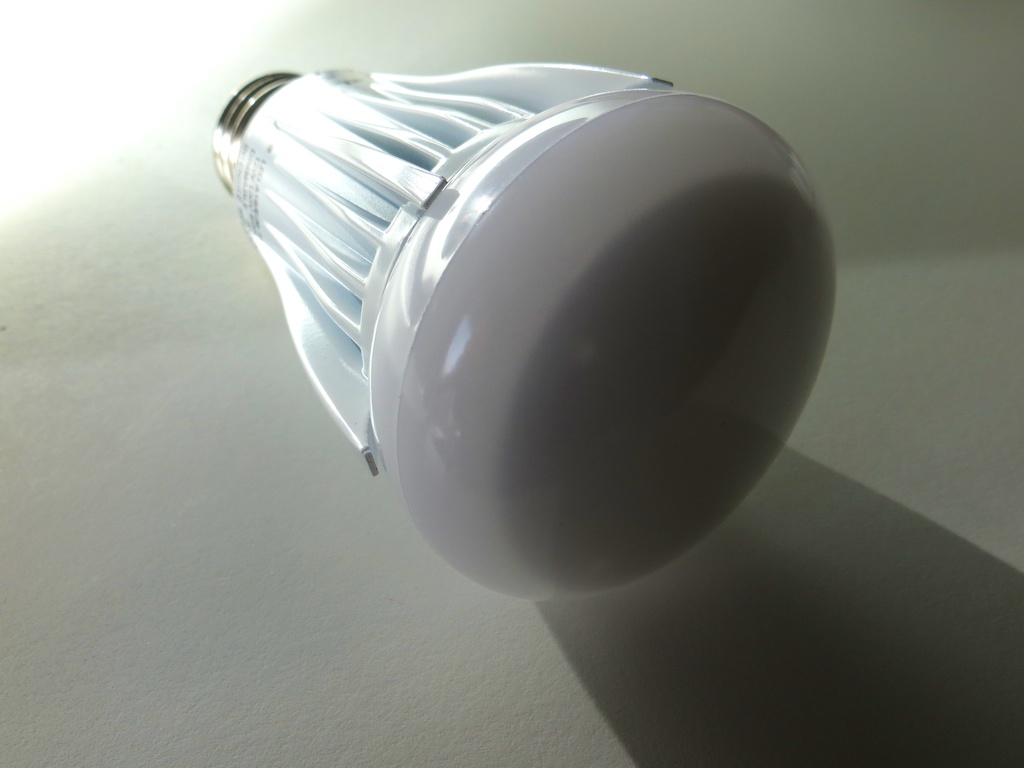
Comforting Curry in Dead Man’s Flats

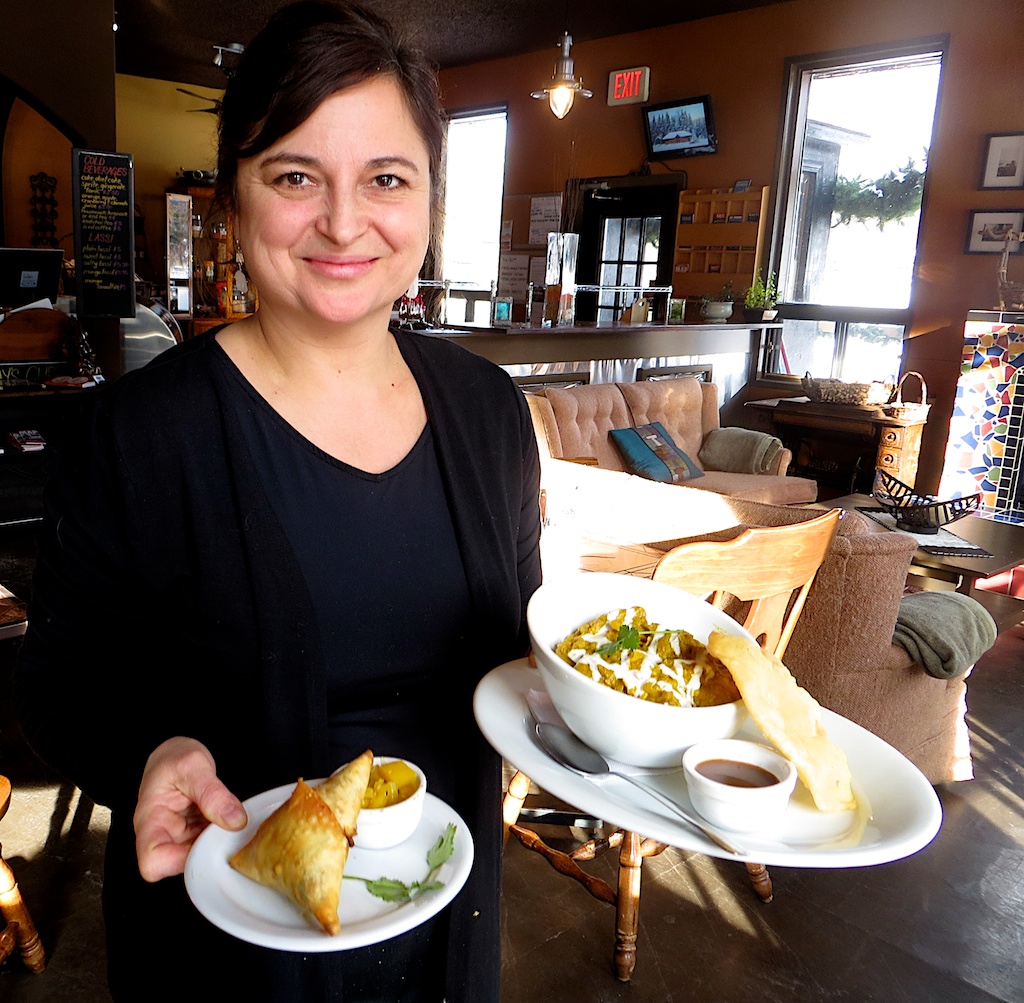
Co-owner Dawn Donald delivers an excellent Burmese chicken curry and samosa at Junction House Cafe

Co-owner Dawn Donald delivers an excellent Burmese chicken curry and samosa at Junction House Cafe

Update: The Junction House has been renamed The Mad Dog Cafe & Market. Same owners, same great food.

The Junction House Café & Spice Market, just east of Canmore, is by no means content to offer just one curry of the day. No, there are six, which co-owner Dawn Donald spends several minutes patiently explaining to me. There’s a forehead-perspiring beef vindaloo, a couple of vegetarian options and my choice of a complex Burmese chicken curry, based on husband Russell Donald’s family recipe, and accompanied by a fresh mango chutney and a puffy puri (Indian fried bread). Of course, I can’t resist adding an excellent vegetable samosa to the bowl.

The Burmese chicken curry is from an old family recipe

The Burmese chicken curry is from an old family recipe

The Donalds are similarly not content to just run a restaurant. They sell complete spice kits for many of the curries, along with fresh chutneys and frozen samosas and finished curries. In winter, Russell also runs a dogsledding tour business, aptly named Mad Dogs & Englishmen.

Open for about 18 months, Junction House is located along the Trans-Canada Highway in the equally delightfully named tiny community of Dead Man’s Flats. The Donald’s building has seen a succession of restaurants come and go over the years. Here’s hoping this great addition to the Canmore-area dining scene can last.

The Junction House Cafe & Spice Market
120 1 Avenue Dead Man’s Flats, Alberta
Sunday to Thursday 8:30 am-5:30 pm, Friday-Saturday 8:30 am-7:30 pm

The Junction House Cafe and Market on Urbanspoon

Sugary Restaurant Meals Aren’t So Sweet

There's a lot of sugar dumped into every food imaginable at the average restaurant

There’s a lot of sugar dumped into every food imaginable in the average restaurant

In recent years, much of the restaurant industry has been quick to embrace food trends based on health. Gluten free? Sign us up. Vegetarian choices? We’ve got you covered. Less salt? Not so much, but we’ll try to accommodate.

But less sugar? I’ve hardly seen the needle bulge. Good luck trying to find, say, pancakes that aren’t topped with sweet sauces and accompanied by syrups, to say nothing of the sugar that went into the batter. Watch Diners, Drive-Ins and Dives or its Canadian version, You Gotta Eat Here, and it’s shocking, at least to me, how much “hidden” sugar is dumped into meat rubs, salad dressings and any bread products. Dessert? You might as well just be eating it by the spoonful.

I wonder how much sugar is packed into this monster blueberry pancake, especially if the syrup and sauce (rear) is ladled on

I wonder how much sugar is packed into this monster blueberry pancake, especially if the syrup and sauce (rear) is ladled on

Diabetes is supposed to be a North American epidemic. Yet I can’t recall eating at a single restaurant that catered to folks wanting menu items with less or no sugar or that were low on the glycemic index—a rating system that estimates how quickly different foods are converted to blood stream sugars; white bread, white rice and most breakfast cereals fare particularly badly here.

Maybe it’s this way because celiac disease or a food allergy can provoke an immediate reaction. Diabetes, on the other hand, is a long-term disease, and sufferers aren’t likely to suddenly pitch forward into their bowl of honey-laced granola topped with a sugary fruit yogurt. And for many people, sugar makes things taste better, at least in moderation.

I’m a Type 2 diabetic and find it extremely challenging when road-trip dining to navigate these sugary waters. I abstain from desserts and sweet drinks. But I do like a good burger or pulled-pork sandwich, and it troubles me how much sugar is tossed into the meat, the bun and any toppings and sauces. I suspect I’d only draw blank stares if I asked for low-sugar versions of these dishes.

So while it’s bad news, perhaps the latest revelation that excess sugar consumption can significantly increase the risk of heart disease will help push the food and restaurant business into offering more low- and no-sugar choices. Now, that would be sweet.

I’m Into Peruvian Food at Inti Restaurant in Calgary

It's a Peruvian family experience (Nicole, left, and Consuelo, right) at Calgary's Inti Restaurant

It’s a terrific Peruvian family experience (Nicole, left, and Consuelo, right) at Calgary’s Inti Restaurant

When I hit a lunch buffet, I’m squarely focused on three things: quality,  volume and price. Service? Just point me towards the groaning tables of steamer trays. But *Inti Restaurant, a fairly new Peruvian restaurant in a northeast Calgary strip mall, nails all aspects of a great buffet dining experience, for only $16.

First and foremost, there’s the excellent and rather exotic Peruvian cuisine. It starts with what, for me, is the meal’s highlight, a spicy chicken soup with peas, which I accompany with a tangy squid and shrimp ceviche. Of course, this is followed by two platefuls of pork stew with potatoes and peanuts, rotisserie chicken, savoury kidney beans and fried yucca. Surprisingly, there’s also a tray of ginger beef, a nod to a post-World War 2 influx of Chinese immigrants to Peru; who knew?

A fabulous spicy chicken soup

A fabulous spicy chicken soup

Purple corn makes an appearance in a house-made fruit drink, chicha morada, and a fruit dessert. Apparently, purple corn is good for high blood pressure. Need more dessert? A friend sings the praises of the coconut rice pudding, but I’m too stuffed to join in.

The usual overflowing buffet plate

The usual overflowing buffet plate

Good as the food is, it may be topped by the interaction with our lovely host, Consuelo. Her son, Hans Puccinelli, officially owns the family-run place, but he’s ensconced in the kitchen. That leaves Consuelo to come by with clean plates, menu explanations and suggestions. By the time we leave, we’ve heard about the family’s migration from Peru to Canada, and Consuelo is imploring us to come for a future pisco sour tasting.

Note: Inti is a favourite hangout for star chefs John Jackson and Connie DeSousa, when they’re not busy running their Charcut Roast House.

Inti Restaurant
208, 3132 26 Street NE, Calgary
Lunch Tuesday to Saturday 11:30 am- 2 pm, Sunday noon-2 pm, dinner Tuesday to Sunday 5 pm-9 pm. Closed Monday
Inti Restaurant on Urbanspoon

Smokin Tuna Cafe in Sooke, B.C.: Blankets Included

Hard to beat this harbour view at Smokin Tuna Cafe in Sooke, B.C.

Hard to beat this harbour view at Smokin Tuna Cafe in Sooke, B.C.

Here’s a guest post from my friend Judy. As always, I’m happy to publish fellow road trippers’ experiences at memorable eateries.

Jacob and I were visiting the Sooke area on Vancouver Island.  We had just finished hiking the coast trail in East Sooke Provincial Park and decided to take the advice of our B & B landlady and visit the Smokin Tuna Cafe, just a short drive from the end of the trail.  We passed through an RV campground of fisher folk to find the Smokin Tuna on the waterfront looking out towards the docks.

The restaurant is in a small, rickety shack facing the water.  We opted to sit outside on the veranda to watch the fishermen arriving with their catch of salmon.  We were even treated to the antics of river otters scavenging the fish innards tossed in the water!  We snacked on a fabulous appetizer of hot fresh salmon in filo pastry and watched the sun go down.  The temperature dropped with the sun and our waitress showed up with blankets!  Gotta like that!

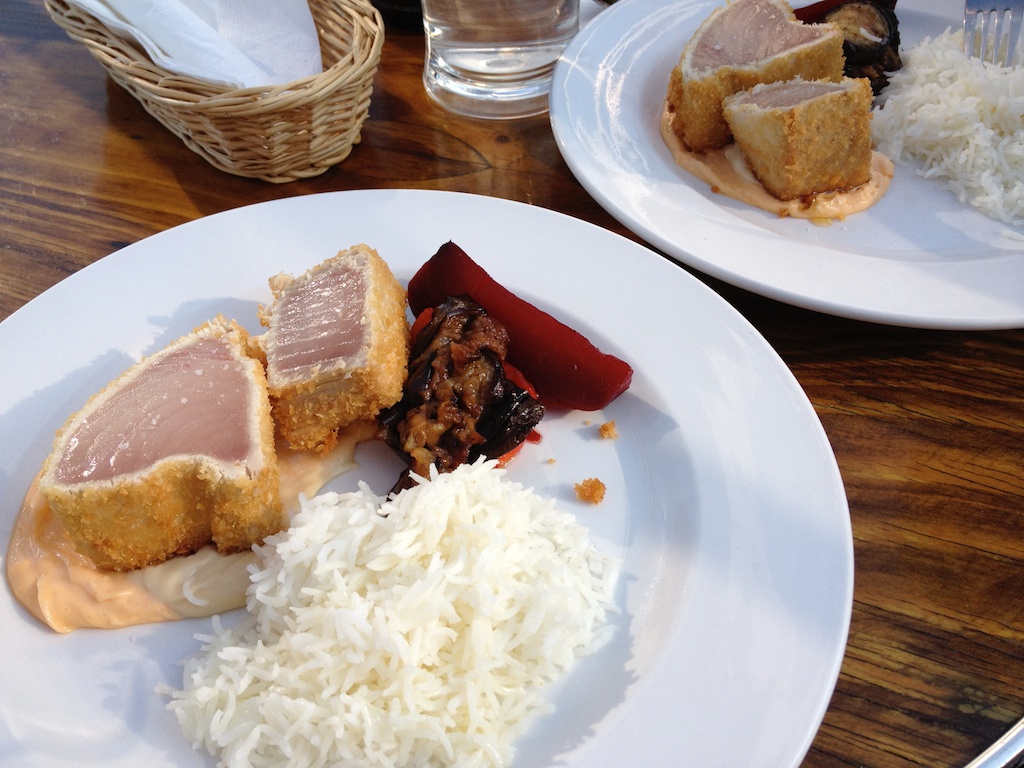
We both decided on the signature entre of pan-seared tuna.  It was thick, perfectly prepared, and absolutely delicious.

Perfectly seared tuna

Perfectly seared tuna

I think the whole meal, including wine for me, was about $35 for both of us.  Not bad at all.

We met the chef/owner on the way out.  A young guy who was cheerful and friendly.  A great spot!

Smokin Tuna Cafe
241 Becher Bay Road, Sooke, B.C.
Friday to Monday 11 am-9 pm, Wednesday 11 am-4 pm, Thursday 11 am-12 am. Closed Tuesday
Smokin' Tuna Cafe on Urbanspoon

Seeing the Light: It’s Time to Switch to LEDs

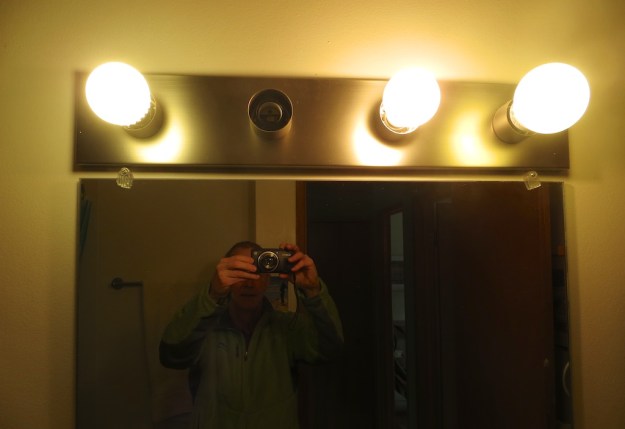
Three generations of light bulbs: Left, a 7.5-watt LED (cool to the touch), Middle, 100-watt incandescent (scalding), Right, 11-watt CFL (warm)

Three generations of light bulbs: Left, a 7.5-watt LED (cool to the touch), Middle, 100-watt incandescent (scalding), Right, 11-watt CFL (warm)

A brief interruption in the road-trip gorging to address the misconceptions surrounding the impending demise of the traditional incandescent light bulb.

As you may have heard, the U.S. and Canadian governments are banning the manufacture or import of incandescent bulbs. The U.S. actually started in 2012 and has just completed the ban, while Canada won’t be finished for another year, though consumers in both countries can still purchase the bulbs while store supplies last.

Perhaps predictably, there has been some hoarding, along with much wailing in some quarters (http://freedomlightbulb.blogspot.ca). Why?

  • Incandescent bulbs are dirt cheap, often less than $1 apiece
  • Many folks are accustomed to the yellowish light cast by an incandescent
  • “No damn government is telling me what to do/taking away my freedom to burn energy… blah, blah, blah”.

The reason governments are doing this—the legislation was introduced under neocons George Bush in the U.S. and Stephen Harper in Canada, by the way—is to promote energy efficiency. Previous administrations passed similar laws regarding the efficiency of everything from refrigerators and clothes washers to vehicles.

Back then, there was an initial outcry about the impossibility of meeting these new targets and the high cost to consumers of doing so. But manufacturers did what business does best: They innovated and, through economies of scale and technological improvements, brought prices down and slashed energy consumption.

Let me point out that the incandescent light bulb is one of the most inefficient of inventions. Indeed, early electric companies often gave bulbs away just so they could make money on the power consumed (kind of like printers and ink cartridges, but I digress).

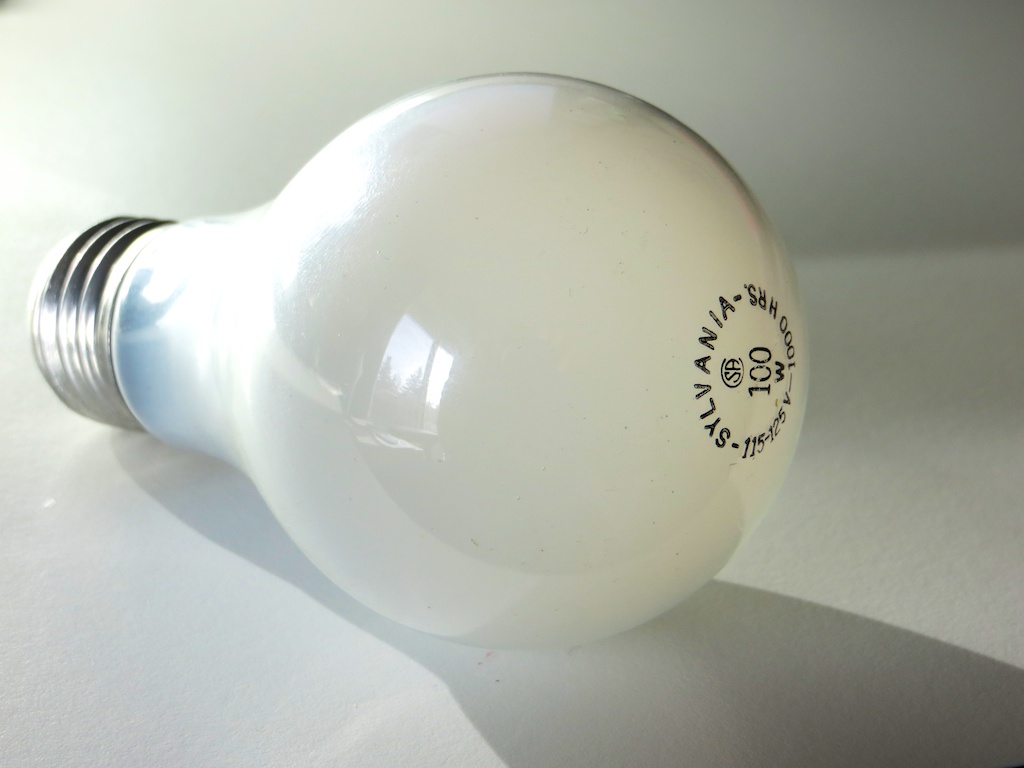
Converting some 90 per cent of its energy to heat, the old-fashioned incandescent bulb is just a mini space heater

Converting some 90 per cent of its energy to heat, the old-fashioned incandescent bulb is just a mini space heater

Roughly 10 per cent of a traditional incandescent bulb’s energy goes to producing light. The remaining 90 per cent is wasted as heat. Effectively, it’s a very inefficient space heater. Incandescents also last as little as 1,000 hours, meaning they have to be replaced every few years. Note: There are improved incandescents, but they’re still not very efficient.

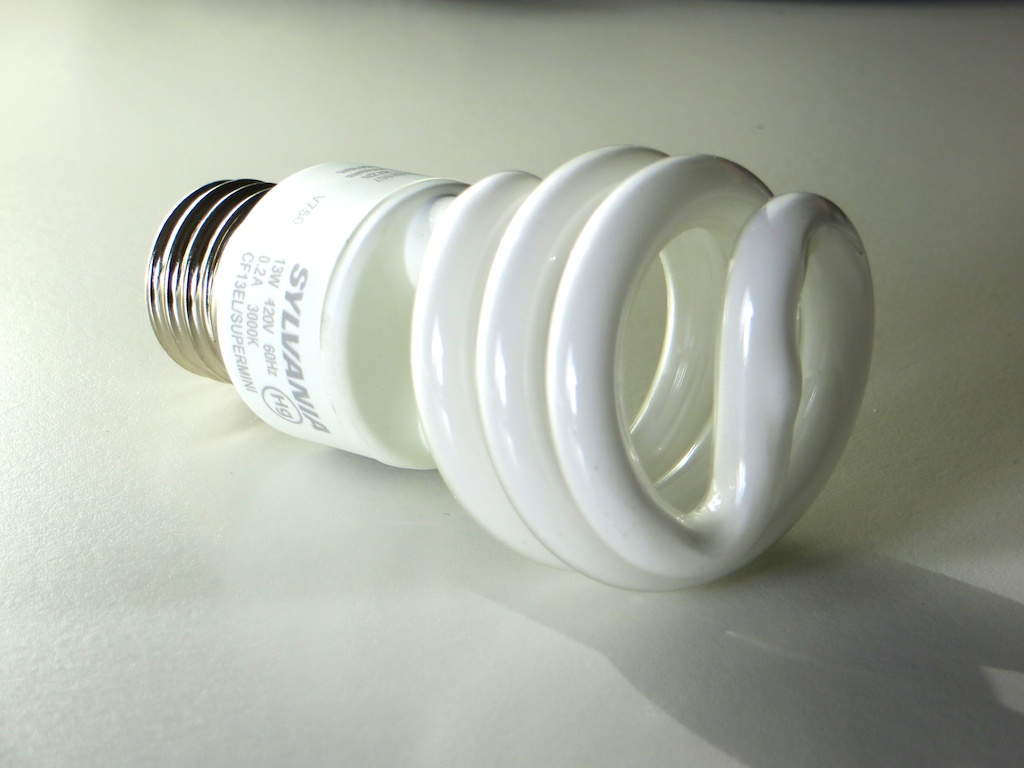
So what’s the solution? Many people assume it’s compact fluorescent lights (CFLs). These corkscrew-shaped bulbs have been around for about a decade, are about 75 per cent efficient, last perhaps 10,000 hours and have plunged in price from about $20 to around $4 or less apiece—it’s that economy of scale and innovation I was talking about earlier.
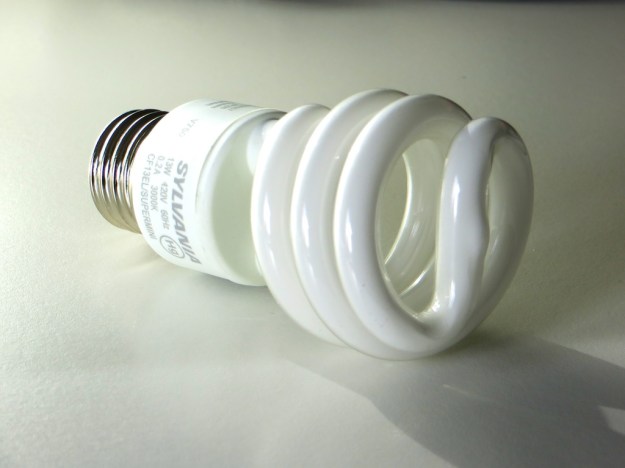
The CFL is a big step up in efficiency but has some problems

The CFL is a big step up in efficiency but has some problems

But CFLs aren’t universally popular. For one, the light takes a few seconds to turn on and get up to speed. For another, CFLs don’t always take kindly to dimmer switches. Finally, they contain mercury and are thus a bit tricky to safely dispose of. This last point is one incandescent defenders/hoarders really seize on, which is a bit rich coming from folks who are otherwise hardly defenders of the environment.

The real point is CFLs are yesterday’s technology. I’m here to tell you the future—light-emitting diode bulbs, or LEDs—is already here. They’re increasingly showing up in street and traffic lights, exit signs and, of course, headlamps that never seem to burn out. But they’re also about to hit the consumer mainstream.
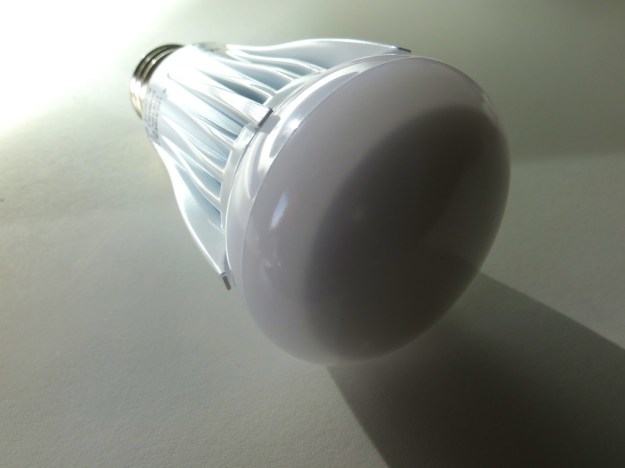
The future is now with highly efficient LEDs that may last longer than you do

The future is now with highly efficient, increasingly affordable LEDs that may last longer than you do

LEDs are a definite step up on CFLs. They’re about 80 per cent efficient, meaning a 9.5-watt LED will produce the same amount of light as a 60-watt incandescent. They also turn on instantly,  are dimmable, increasingly produce light similar to incandescents and  contain no mercury. Did I mention, they never seem to burn out? I recently bought one for a desk lamp that is estimated to last 36 years, which will pretty much see me out.

The only remaining knock against them is the price. When I first heard of them, LEDs cost some $40 apiece, which made for a hard sell in terms of energy savings/payback.

But remember that earlier bit about economies of scale/technology development? Well, in the past year or so, the price of an LED bulb has fallen to first about $20 and now to nearly $10 for a newer, pancake-shape bulb (60-watt equivalent) produced by Philips.

The other day, I went to Costco, which has an impressive selection of LED bulbs, including a three-bulb package of 40-watt equivalent bulbs—plenty for reading or bathroom vanities—for only $20, or less than $7 apiece. There was also a $10, 60-watt equivalent, with a four-year warrantee and a lifespan of some 40,000 hours. At 10 cents a kilowatt hour, used for three hours a day, this bulb will use only 16 per cent of the electricity of an equivalent incandescent and should save me $190 in power costs over its decades-long lifetime. That’s just for one of maybe two dozen lights in a typical house; lighting typically accounts for 10-15 per cent of electricity consumed in the average home. And prices on these LED bulbs are only going to keep falling.

So forget, for a moment, the environmental/climate change argument of incandescent bulbs consuming way more energy than is necessary. There’s also no longer a real economic argument for keeping them in use. It’s just stupid.

Unlock My Chains: The Big 3 Fast-Food Restaurants & Coffee Shops

There's nearly always lineups at Canada's fast-food king, Tim Horton's

There’s nearly always lineups at Canada’s fast-food king, Tim Hortons

I’m all about independent food places and coffee shops. It’s why I write this blog. But I do occasionally sneak into a fast-food chain. Honest, it’s just to use their WiFi connection when I can’t find a local, open coffeehouse and need to locate something or book a last-minute motel, especially if my smart phone is turned off to save roaming charges in the U.S.

As a result, I get to focus my laser-like observation skills on how these chains operate and the coffee lingo used by regulars: a “double-double” (two cream, two sugar) in Canada’s Tim Hortons and, my favourite, a “tall Ethiopian” in Starbucks. Plus, I invariably order a coffee or snack, seeing as how I might be using their WiFi for half an hour and think it’s highly unethical to carry an empty Starbucks’ or McDonald’s cup from place to place to feign a purchase. Really, I’ve hardly ever done that.

The reason the following places are successful is they, like other popular chains, deliver consistency and predictability, with enough new products thrown in to keep the regulars from getting bored. Mind you, when pulled pork, poutine or paninis hits their menus, you know the trend has long since passed. And the stuff is churned out so fast that “made to order” is not in the vocabulary.

Continue reading